
Historical framing

Why the northern coast lighthouses mattered

These towers were not isolated monuments but a linked working system that helped vessels read distance, danger, and direction along a difficult shoreline. Their lights, signals, and keepers translated weather and tide into practical guidance for ships and fishing crews. Together, they shaped both maritime safety and the rhythm of nearby settlements.

  • Navigation: light patterns and coastal sightlines guided mariners through reefs, headlands, and harbor approaches.
  • Weather: fog, winter surf, and sudden storms made signal timing and keeper vigilance essential to survival.
  • Coastal communities: provisions, repairs, and rescue efforts tied the stations closely to surrounding towns.
Continue to the timeline.
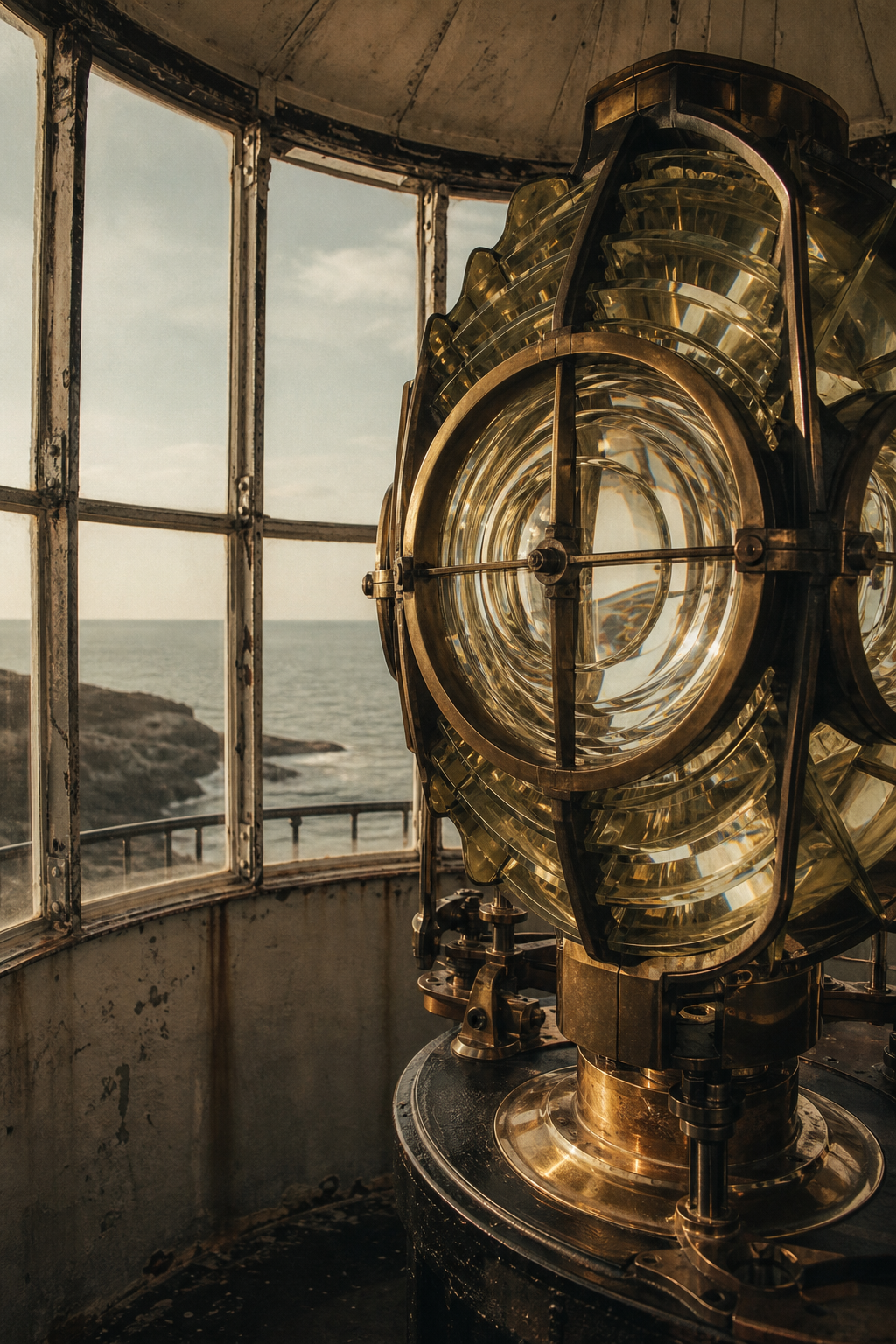
Warm-toned archival photograph of a lighthouse lantern room with brass lens assembly and weathered framing
Lantern room detail, northern coast station archive, early 20th century.

Northern Coast Chronicle

A working timeline of lighthouse history

From first lanterns to modern preservation, these milestones trace how coastal towers shifted from urgent navigation tools to protected heritage landmarks.

  1. 1820s–1840s

    First beacon stations commissioned

    Timber towers and oil lamps were installed near reef-heavy approaches, creating the coast's first coordinated nighttime signals.

  2. 1860s

    Stone and iron towers replace wood

    Storm losses accelerated a regional rebuild, introducing taller masonry towers designed for stronger visibility and endurance.

  3. 1890s–1910s

    Fresnel optics and fog signaling expanded

    Powerful lenses, bell houses, and compressed-air horns extended warning range for steamship traffic in dense coastal weather.

  4. 1930s–1950s

    Electrification reshaped keeper routines

    Electric lamps and radio links reduced manual night work but preserved resident keepers as weather observers and first responders.

  5. 1960s–1980s

    Automation and decommissioning era

    Remote systems brought efficiency, while many secondary lights were retired, leaving buildings vulnerable to neglect.

  6. 1990s–Today

    Community preservation and public access

    Local trusts stabilized surviving towers, opened archives, and linked sites into a shared heritage route for visitors and students.

Continue by place: Explore the map

Preservation notes: how towers endure

Surviving lights remain legible because restoration is paced, records are shared, and visitor access is managed with care. These principles connect the historical record to present stewardship and guide the next step: explore the map.

  • Material continuity — Original stone, iron, and lens housing are repaired before replacement.

  • Documented interventions — Every structural change is logged so future work remains traceable.

  • Community memory — Keeper accounts and local oral histories are preserved beside technical records.

  • Careful access — Paths, railings, and seasonal limits reduce wear while keeping towers visitable.